
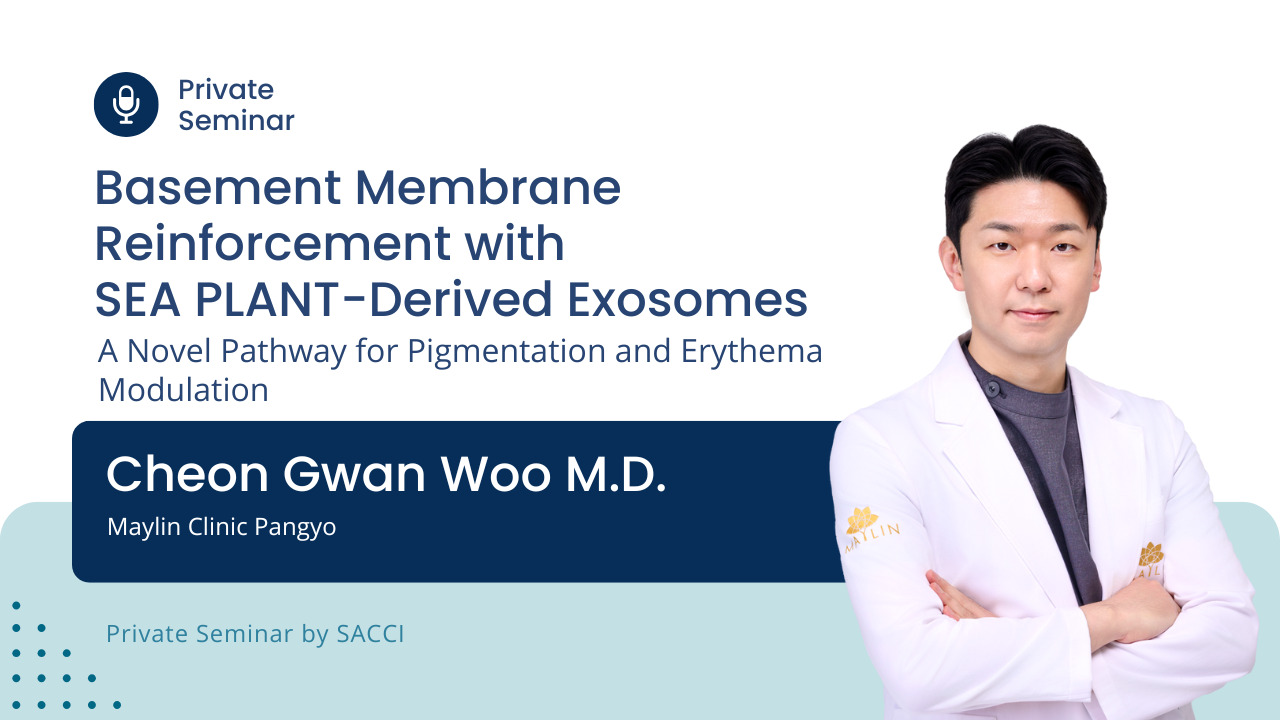
In this webinar, Dr. Cheon Gwan Woo, Director of Maylin Clinic Pangyo in South Korea, presented on the fundamentals and clinical applications of “EXO-BM,” an exosome preparation derived from the sea plant Gamtae (Korean brown algae). He provided detailed explanations, supported by evidence and actual case studies, covering the strengthening of the basement membrane, approaches to UV-induced pigmentation and inflammatory skin conditions, and combination therapies with energy devices such as POTENZA.
- INDEX
The Sea plant Gamtae-derived Exosomes and Phlorotannin Evidence (00:30–)
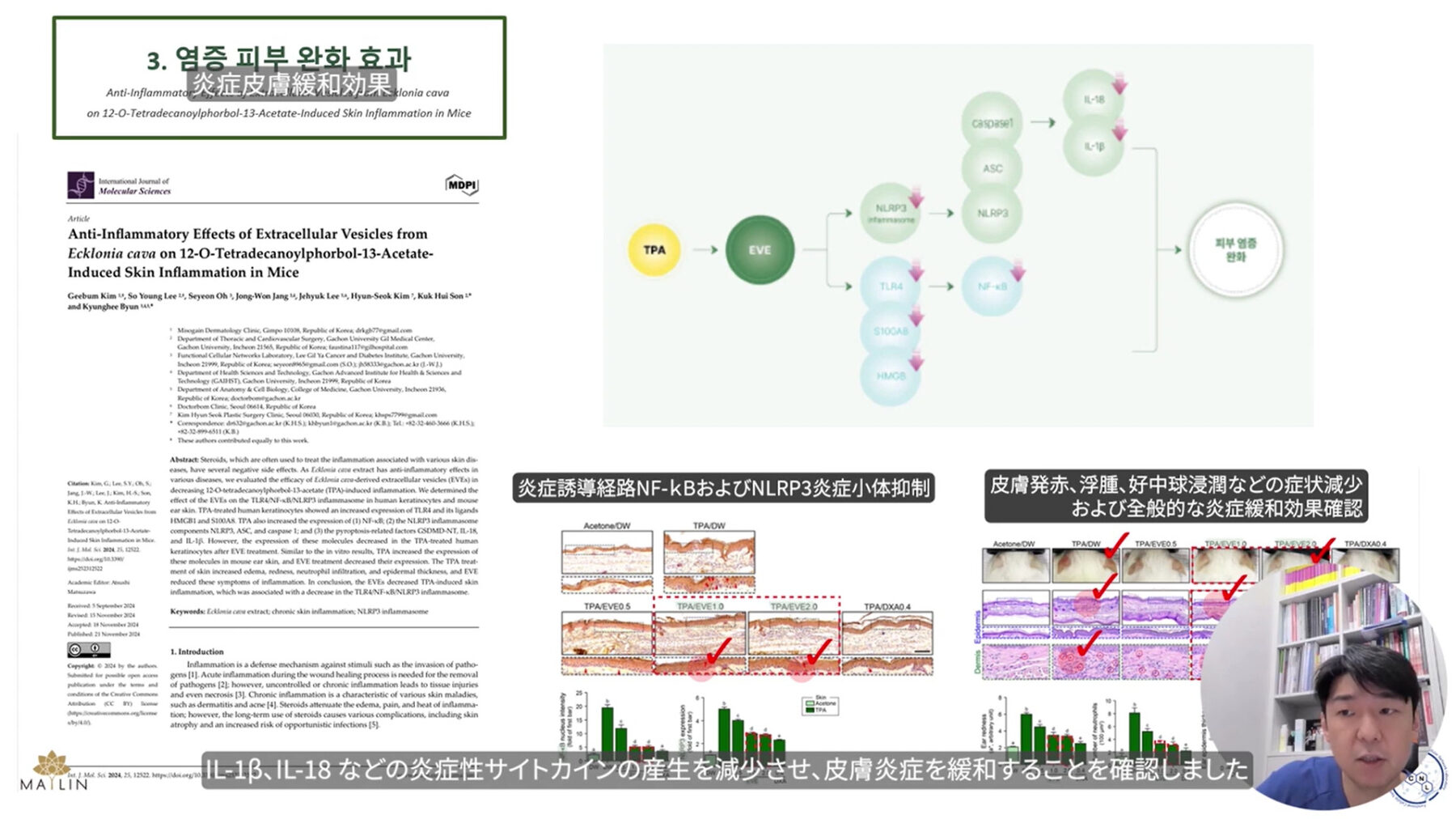
The first paper demonstrates rejuvenating effects on aged skin. Combining the sea plant Gamtae-derived Exosomes with PT increased HSP70 expression while suppressing TNFα, NF-κB, and MMP expression. This reduced reactive oxygen species (ROS) levels, inhibited degradation of basement membrane components like collagen and laminin, and improved collagen accumulation and elasticity.
The next paper analyzes the mechanism suppressing UV-induced pigmentation. It shows that the sea plant Gamtae-derived Exosomes and phlorotannin activate the NRF2/HO-1 signaling pathway, which inhibits ROS and NLRP3 inflammasome, thereby reducing both inflammatory cytokines and melanin production. The third paper confirmed anti-inflammatory effects in a TPA-induced inflammation model, simultaneously suppressing NLRP3, TLR4, and NF-κB pathways to reduce inflammatory cytokines such as IL-1α/β and IL-18. In addition, based on the effects of each individual component, He also noted that a greater synergistic effect can be achieved by combining exosomes with phlorotannin.
The Concept of Not “Penetrating” but “Activating the Surrounding Microenvironment” (09:15–)
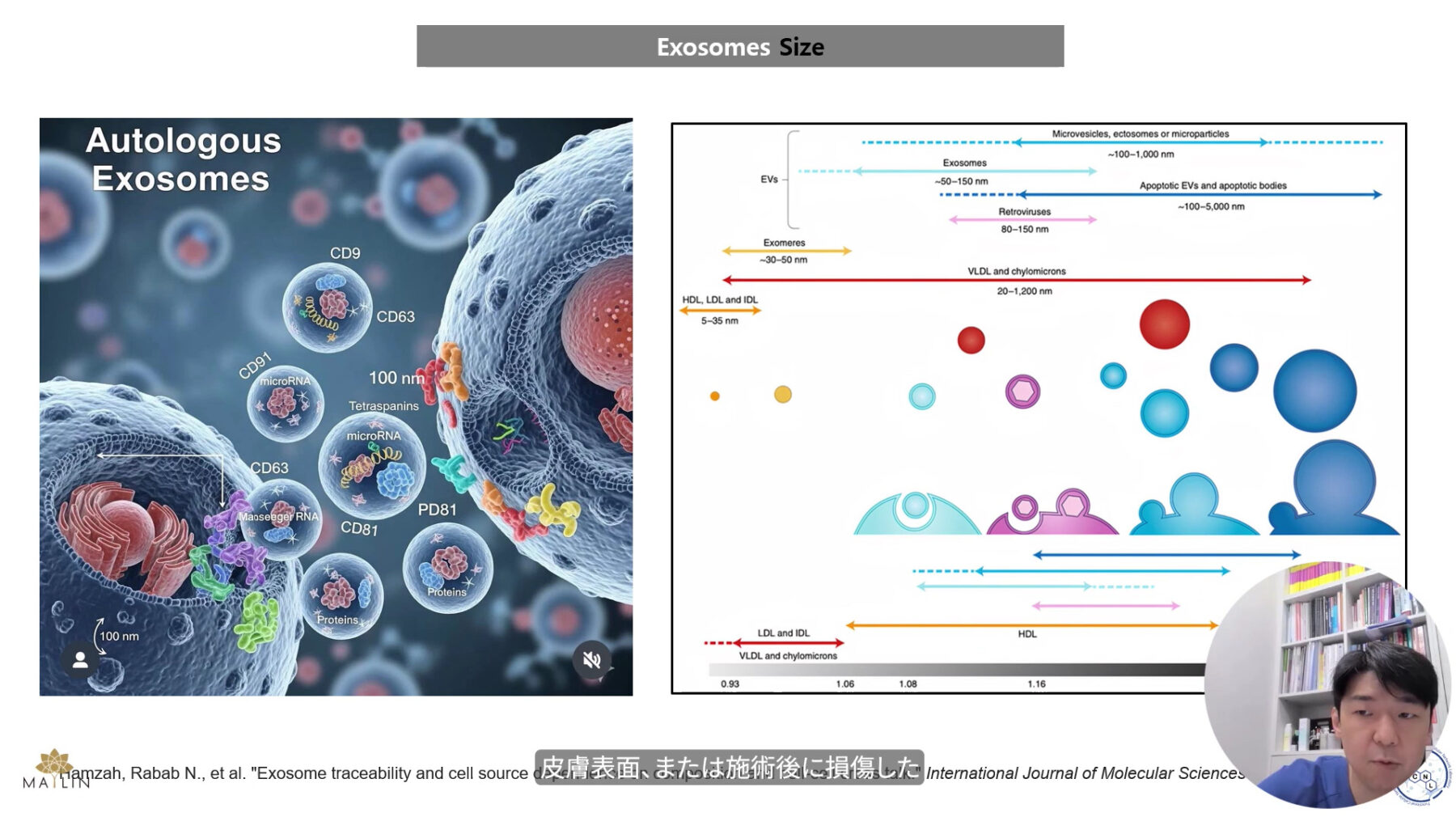
Exosomes are vesicles around 30 to 150 nm in size, which translates to massive complexes with molecular weights ranging from 10⁶ to 10⁹ Da. Therefore, considering the so-called “500-dalton rule,” it is not realistic to expect them to pass through the stratum corneum by simple diffusion. I view topical exosome formulations not as products designed to “penetrate,” but primarily as agents that “activate” the surrounding microenvironment via receptors on keratinocytes and fibroblasts present in the epidermis and superficial dermis.
Combining EBD such as POTENZA (12:10-)
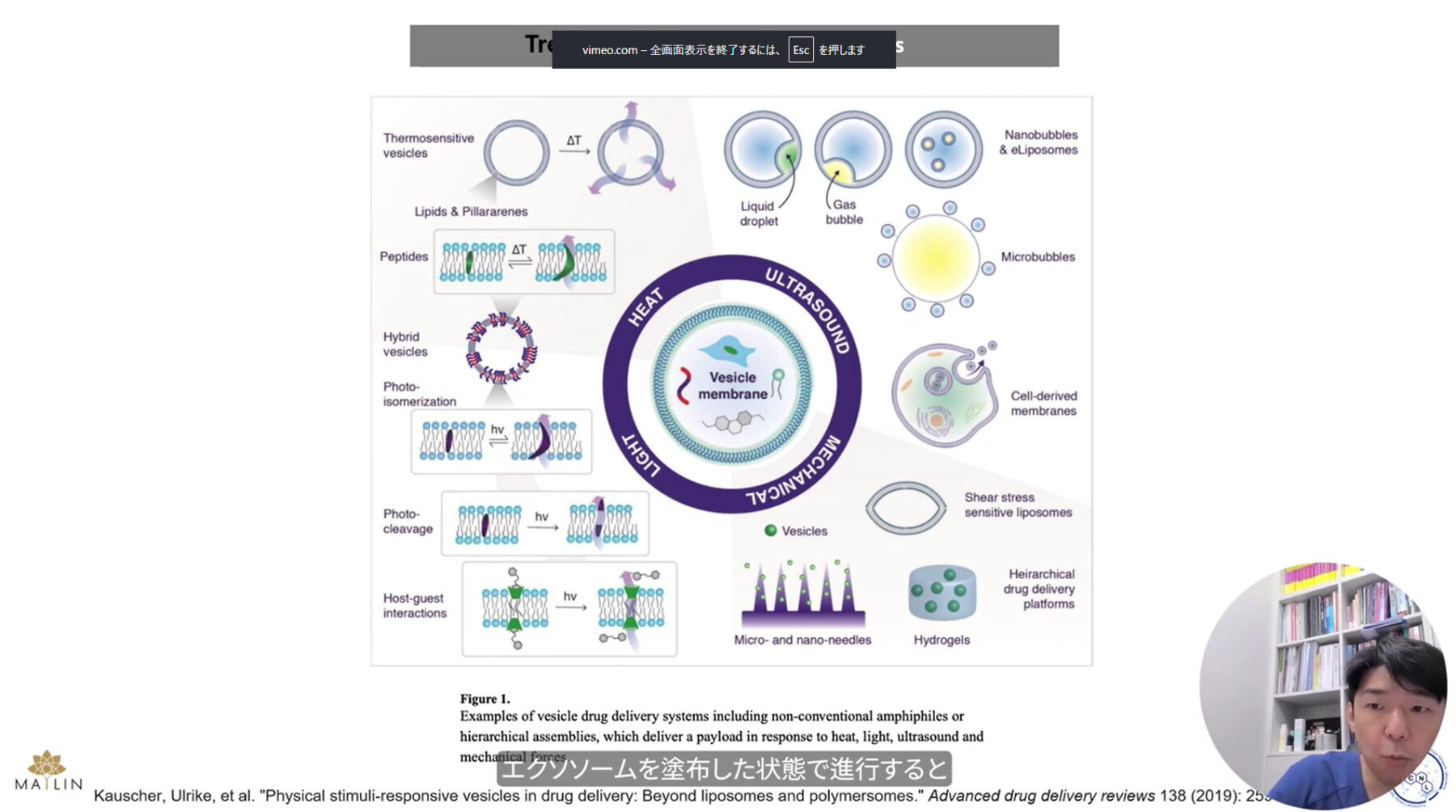
Next, we discuss combinations with various energy devices that act on the vesicle membrane of Exosomes. Stimuli such as heat (RF, HIFU), light (IPL, LLLT), ultrasound (LDM, etc.), and mechanical stimulation (needles) are thought to temporarily “loosen” the Exosome membrane, promoting the release of its internal compounds (cargo).
At my clinic, for cases suspected of melasma or basement membrane dysfunction, we perform irradiation using the POTENZA DDR tip or 49-pin tip with EXO-BM applied. Following this, we combine a protocol that incorporates additional introduction of mask packs or ampoules using LDM or direct current infusion devices. This approach achieves minimal redness and downtime while delivering high levels of hydration and radiance.
AGE・Life Guidance and EXOBM Positioning (17:10-)
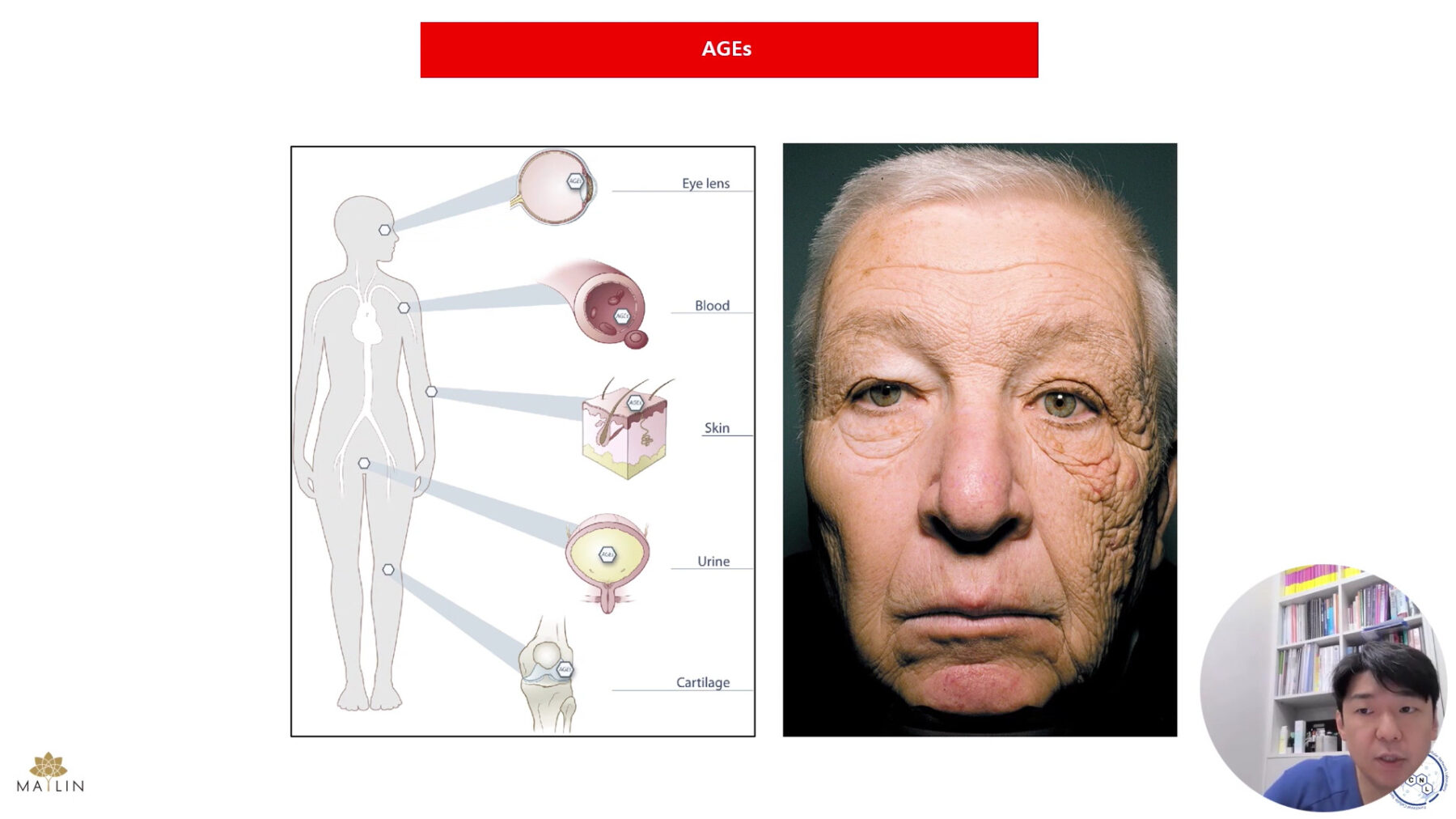
Finally, the relationship between glycation (AGEs) and aging/pigmentation. Increased ROS leads to AGE accumulation, which contributes to melanin synthesis and the progression of intrinsic and extrinsic aging. Lifestyle guidance to limit excessive sugar intake and consume antioxidant nutrients is provided to all patients. Further, we believe incorporating EXO-BM—which has antioxidant and anti-inflammatory effects—before and after laser, RF, or toning can suppress pigmentation while protecting the basement membrane, thereby improving the quality of downtime.