
Scar management is an indispensable discipline in clinical practice, yet conventional therapies have long suffered from high patient dropout rates due to the excruciating pain of local steroid (Kenacort) injections and the high risk of post-inflammatory hyperpigmentation (PIH) and prolonged downtime associated with fractional lasers.
Drawing from 25 years of specialized plastic surgery experience, Dr. Hideyuki Muramatsu presents a modern treatment paradigm powered by Microneedle RF, covering its deep thermal mechanism, indication-specific strategies distinguishing keloids from hypertrophic scars, diverse clinical applications, and essential practical pearls.
Limitations of Conventional Scar Therapies and the Microneedle RF Paradigm Shift [03:40~]
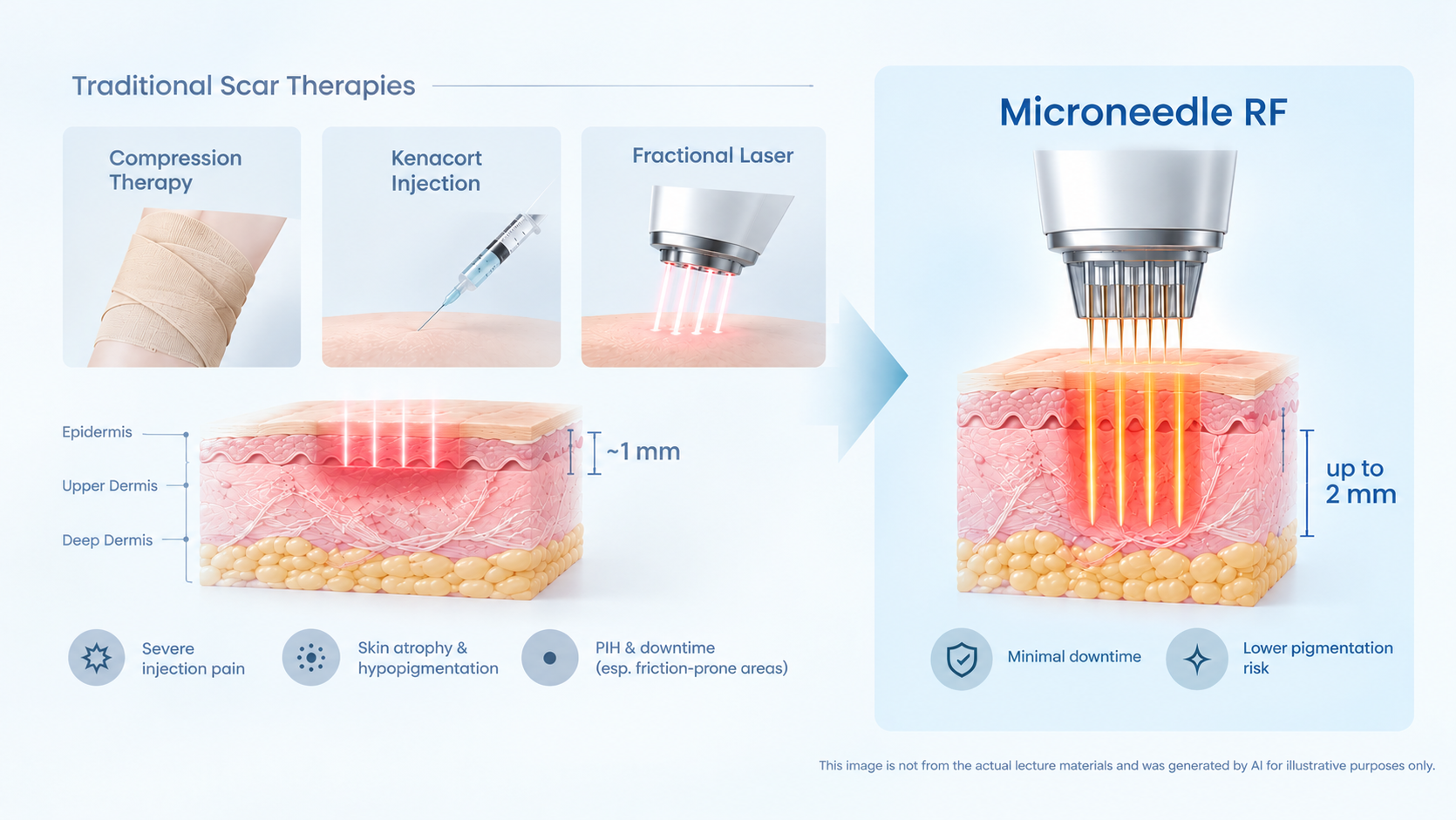
Traditional scar management has predominantly relied on compression therapy, local Kenacort injections, and fractional lasers. However, severe injection pain remains the primary reason patients abandon Kenacort regimens, accompanied by side effects such as skin atrophy and hypopigmentation. Furthermore, because fractional lasers concentrate thermal energy on the surface and reach only the upper dermis (~1 mm), they frequently trigger post-inflammatory hyperpigmentation (PIH) and extensive downtime, particularly in friction-prone anatomical zones. By contrast, Microneedle RF penetrates directly into deep dermal layers up to 2 mm without burning the epidermal barrier. This allows clinicians to target deep fibrosis while significantly minimizing downtime and pigmentation risks, providing a far safer, deeper therapeutic alternative.
The Triad Mechanism of Microneedle RF and Synergistic Remodeling [10:13~]
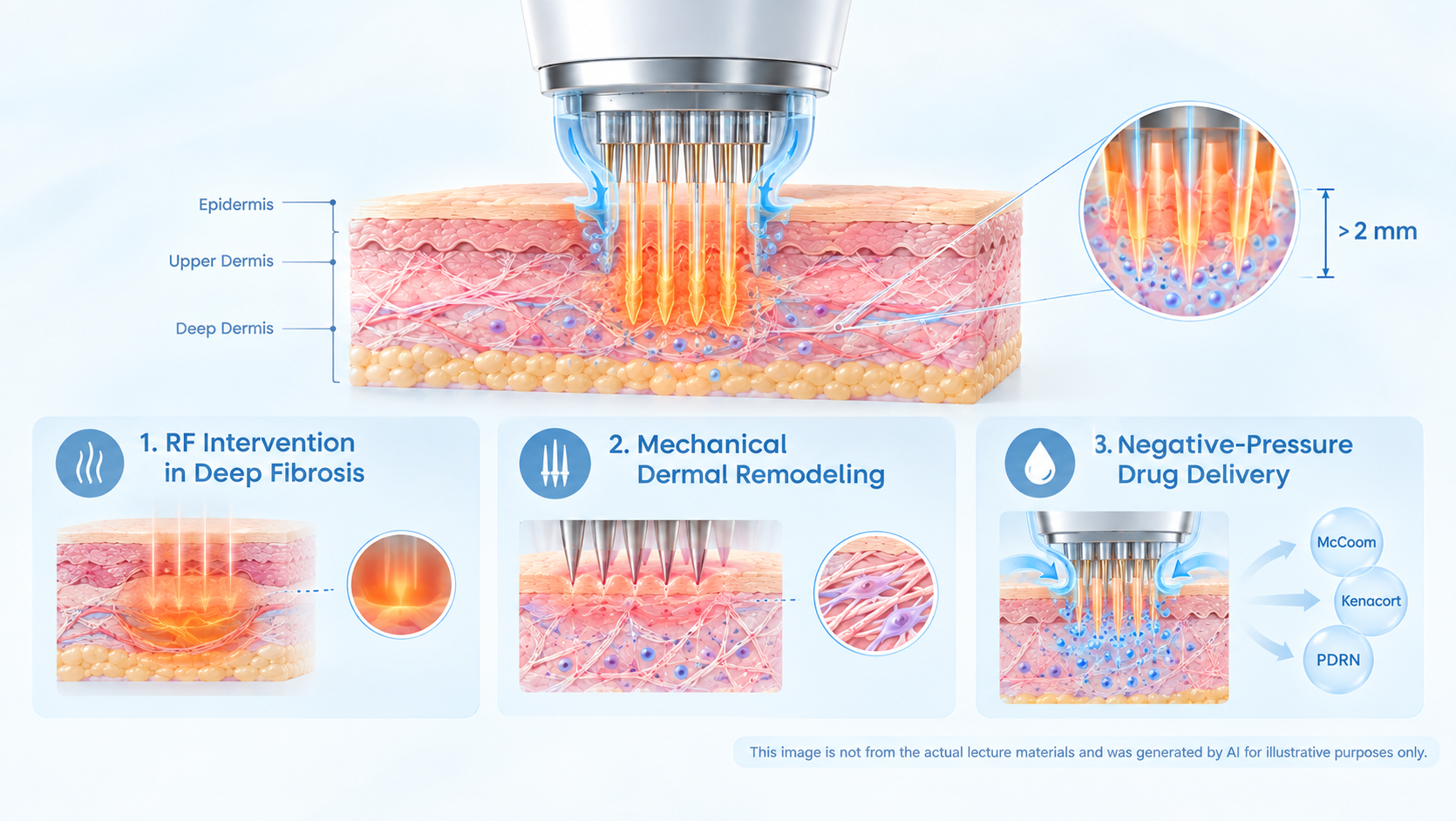
The efficacy of Microneedle RF lies in the multi-faceted synergy of depth-controlled radiofrequency (RF), mechanical microneedling, and an advanced negative-pressure drug delivery system (DDS):
- RF Intervention in Deep Fibrosis: Modulates fibroblast activity and collagen synthesis by targeting tailored depths—delivering deep thermal energy for mature scars and more superficial heating for hypertrophic scars.
- Mechanical Dermal Remodeling: Controlled needle puncture creates uniform micro-injuries in the dermis, triggering natural wound-healing cascades and structural tissue reorganization.
- Negative-Pressure Drug Delivery: Rather than passive topical application, negative-pressure suction ensures uniform infusion of active agents—including McCoom, Kenacort, and PDRN—deeper than 2 mm into the tissue bed, yielding substantially superior clinical synergy compared to monotherapies.
Keloids vs. Hypertrophic Scars: Indication-Specific Treatment Strategies [15:58~]
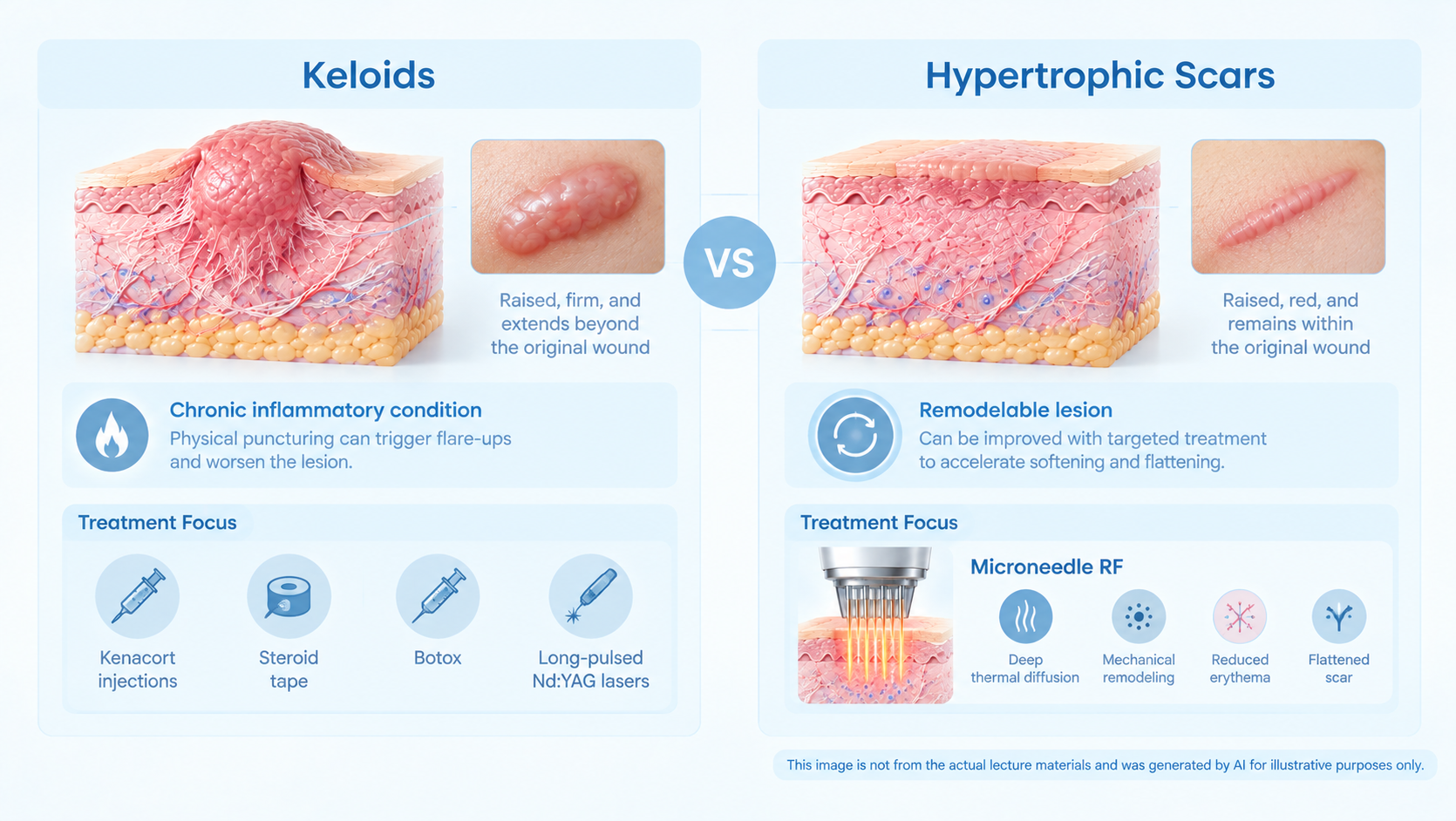
While clinically similar in appearance, keloids and hypertrophic scars stem from entirely different pathophysiology and require distinct therapeutic roadmaps. Keloids represent a chronic inflammatory condition where physical puncturing can trigger flare-ups and worsen the lesion; hence, their management must strictly center on anti-inflammatory control via Kenacort injections, steroid tape, Botox, and long-pulsed Nd:YAG lasers. Conversely, hypertrophic scars are remodelable lesions. For these, Microneedle RF serves as an indispensable tool, leveraging deep thermal diffusion and mechanical remodeling to accelerate softening, reduce vascular erythema, and flatten raised tissue.
Practical Case Studies Across Indications & Clinical Expectation Management [18:21~]
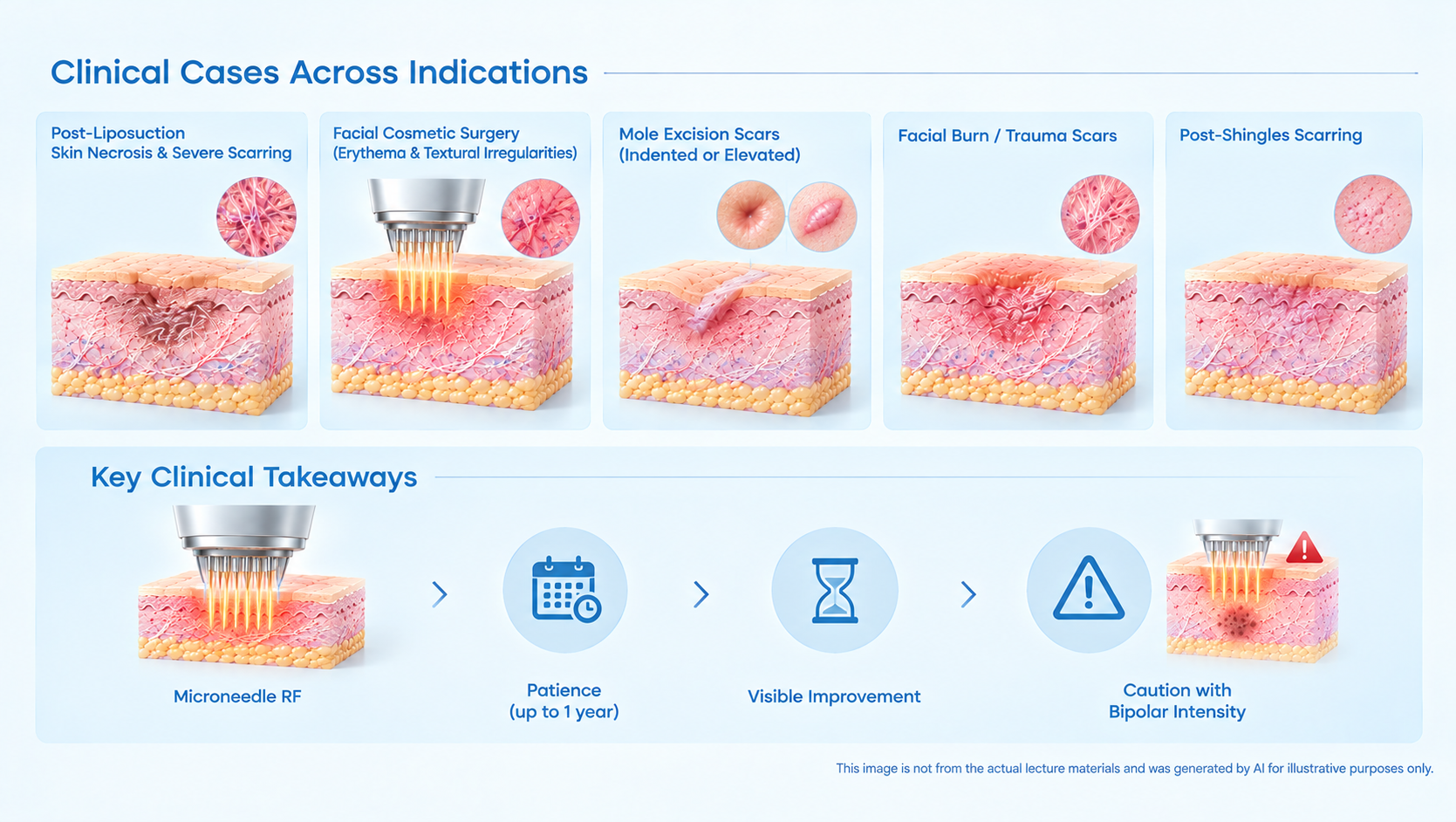
The final segment demonstrates verified clinical outcomes across a diverse spectrum of complex scar indications. Highlighted cases include skin necrosis and severe scarring following liposuction (groin, arm, thigh), erythema and textural irregularities after facial cosmetic surgeries (philtrum reduction, alar base excision, corner lip lift), indented or elevated scars from mole excision, facial burn/trauma scars, and post-shingles scarring. In each scenario, Microneedle RF facilitated rapid reduction of redness, tissue softening, and structural contouring.
Dr. Muramatsu stresses that clinicians must practice proactive expectation management: scars never disappear completely, and patients must be informed that treatment requires patience (up to one year) toward practical cosmetic improvement. Additionally, practitioners are advised to exercise caution with bipolar intensity settings, as excessive thermal delivery can still provoke hyperpigmentation despite needle insulation.