
The 6.78MHz radiofrequency (RF) landscape has entered an intensely competitive era dominated by monopolar platforms. However, practitioners frequently encounter a frustrating clinical paradox: even when adhering to standard manuals, clinical outcomes vary widely across practitioners, and clinicians remain trapped in a trade-off between pain and efficacy. Increasing energy output reaches deeper tissues but causes intolerable patient pain, while decreasing energy mitigates discomfort at the expense of therapeutic results.
In this webinar summary, board-certified plastic surgeon Dr. Hidekazu Yoshizawa explores the principles of capacitive coupling heating, the biological superiority of sequential Monopolar and Bipolar delivery, and how next-generation electrode design (ALPHA Tip) resolves edge heating, eliminates unheated blind spots, and delivers safe, operator-independent tightening.
Target Tissues of 6.78MHz RF & The Clinical Dilemma of Monopolar Delivery [01:26~]
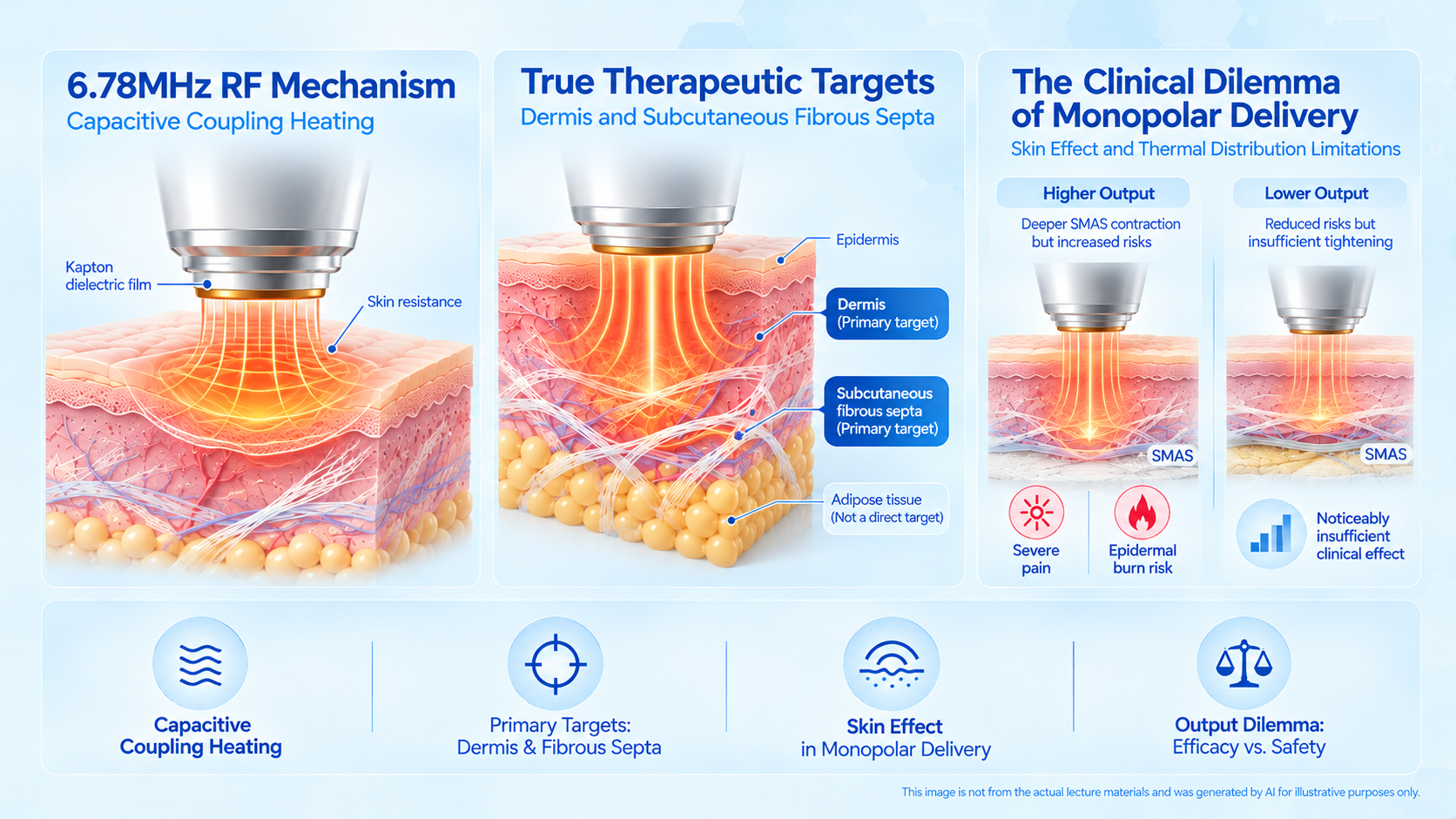
6.78MHz devices operate primarily via capacitive coupling heating, where the Kapton dielectric film on the electrode and the skin resistance match impedance to form a functional capacitor. Crucially, over 80% of the energy generated is Joule heating, establishing that the true therapeutic targets are the dermis and subcutaneous fibrous septa, rather than adipose tissue itself.
However, due to the high-frequency “skin effect” where current concentrates along conductor surfaces, traditional monopolar tips utilize thick dielectric margins, frequently resulting in weakened edge heating or bimodal temperature deviations across the center. Consequently, clinicians face an inherent dilemma: raising output to achieve deep SMAS contraction triggers severe pain and epidermal burn risks, whereas lowering output renders the clinical tightening effect noticeably insufficient.
Biological Mechanism & Remodeling Superiority of Monopolar-Bipolar Sequencing [05:21~]
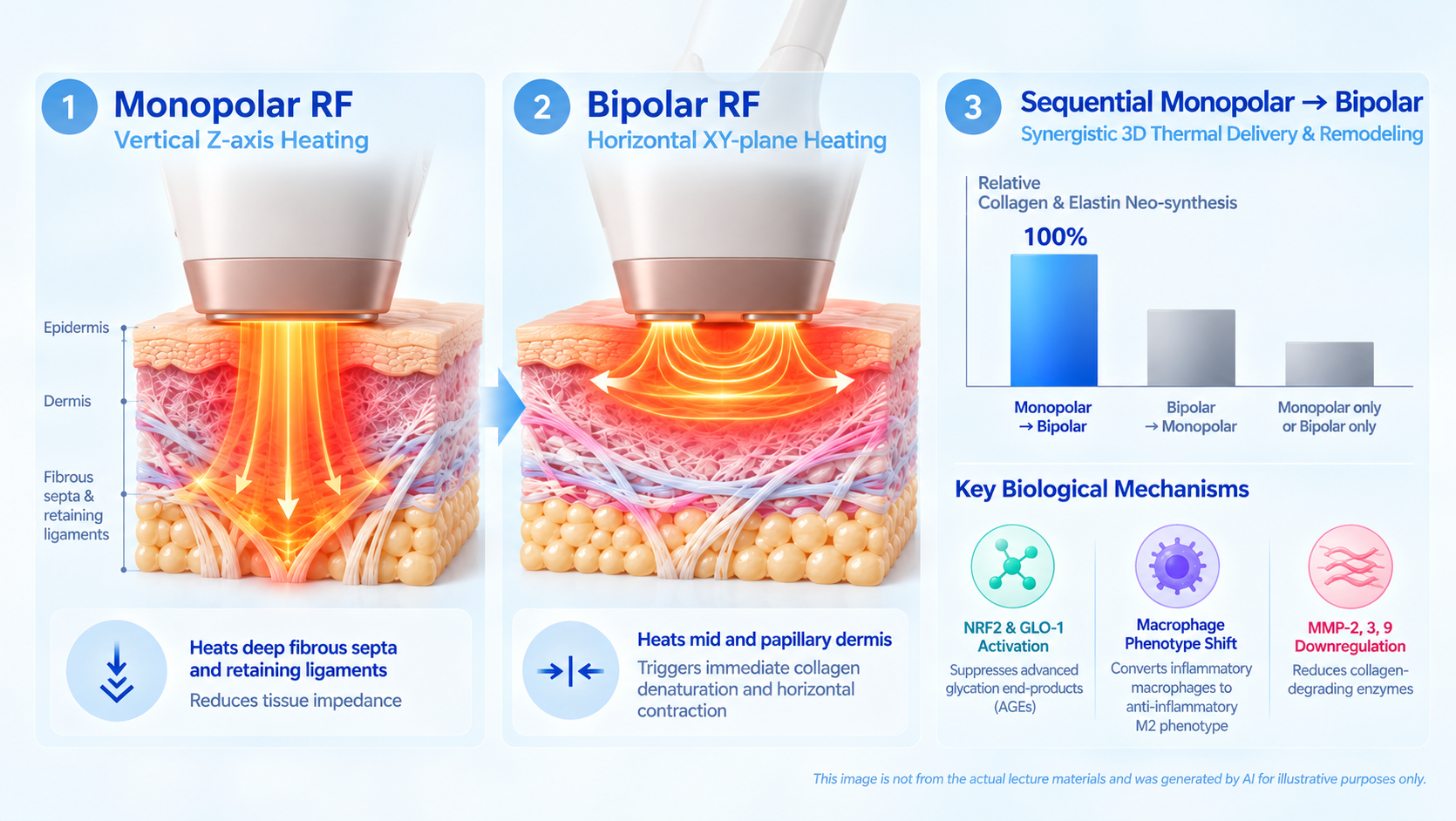
The solution to incomplete tightening lies in synergistic three-dimensional thermal delivery combining Monopolar and Bipolar emissions. Monopolar RF acts along the vertical Z-axis, heating deep fibrous septa and retaining ligaments while significantly reducing tissue impedance. Bipolar RF immediately follows along the horizontal XY plane, precisely heating the mid and papillary dermis to trigger immediate collagen denaturation and horizontal contraction across the pre-warmed, low-impedance tissue.
Research confirms that sequencing Monopolar before Bipolar achieves a 100% baseline for collagen and elastin neo-synthesis, whereas reverse or isolated sequences yield significantly lower yields. Biologically, this dual thermal stimulation activates NRF2 and GLO-1 oxidative pathways to suppress advanced glycation end-products (AGEs), converts inflammatory macrophages into anti-inflammatory M2 phenotypes, and downregulates collagen-degrading enzymes (MMP-2, 3, 9) to fundamentally rejuvenate senescent fibroblasts.
Thermal Innovation of Next-Generation Electrodes & Pain Mitigation [06:23~]
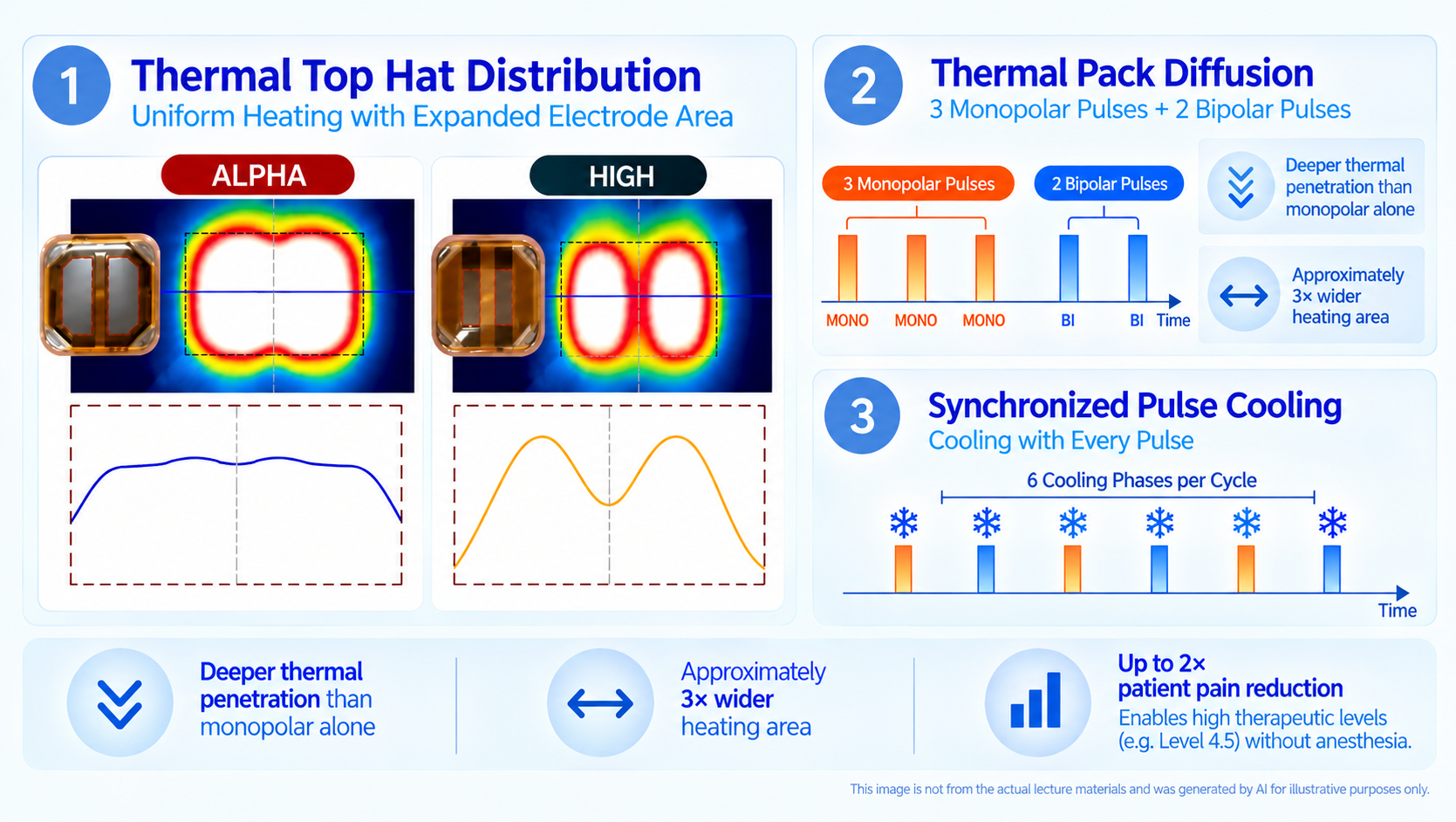
The newly evolved 3rd-generation design (ALPHA Tip) systematically eliminates practitioner-dependent variations and thermal hotspots:
- Thermal Top Hat Distribution: By optimizing dielectric film margins and expanding the active electrode area by over 1.5 times, it eliminates unheated central blind spots, achieving a uniform, flat temperature profile (Top Hat) that eliminates thermal spikes and minimizes burn risks.
- Thermal Pack Diffusion: Featuring an emission profile of 3 Monopolar pulses followed by 2 Bipolar pulses, it provides thermal penetration deeper than monopolar alone while covering roughly three times the heating area of earlier dual-emission tips.
- Synchronized Pulse Cooling: Incorporating cooling gas bursts with every pulse (6 total cooling phases per cycle), the tip doubles patient pain reduction, allowing clinicians to comfortably deliver high therapeutic levels (such as Level 4.5) without anesthesia.
Stratified Patient Protocols & Clinical Case Analysis [16:21~]
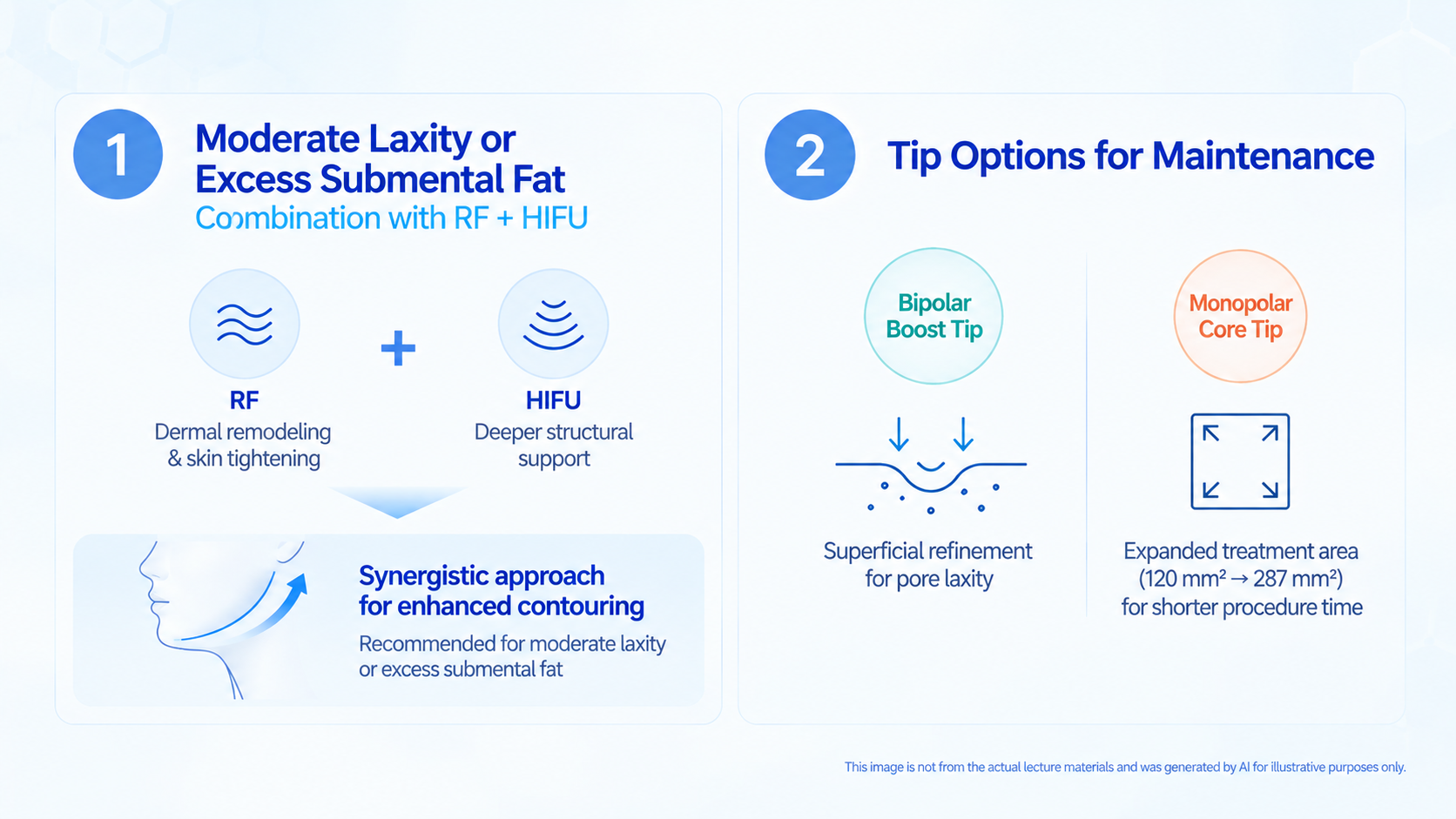
Dual-mode RF provides adaptable protocols across varied clinical profiles. While serving as an effective standalone treatment for mild laxity, combining the tip with HIFU is recommended for moderate laxity or excess submental fat. For surgical candidates, applying it for post-operative tightening and long-term maintenance preserves structural outcomes and elevates patient satisfaction.
In documented clinical cases, a male patient in his 40s treated at Level 4.5 exhibited dramatic contouring of the jawline and nasolabial folds at 3 weeks without procedural pain. In a 40-year-old female case, volumetric tightening restructured aged, spindle-shaped sagging pores back into a youthful, rounded morphology within one month. For long-term maintenance when superficial pore laxity reappears around 3 months, clinicians can incorporate the purely bipolar Boost Tip for superficial refinement, or leverage the expanded (120 mm² to 287 mm²) monopolar Core Tip to shorten overall procedural times while maintaining comprehensive full-layer tightening.