In daily aesthetic practice, patients present with complex overlapping concerns—including acne scars, enlarged pores, melasma, benign dermal tumors, and skin laxity. However, acquiring separate single-purpose devices for each indication creates severe spatial and financial overhead. Furthermore, conventional modalities such as ablative CO2 lasers, picosecond fractionals, and standard mechanical dermapens carry inherent clinical limitations: severe post-inflammatory hyperpigmentation (PIH), risks of mottled hypopigmentation, and mechanical irritation provoking melasma exacerbation.
Drawing on 8 years of integrated insurance and cosmetic dermatology experience, Dr. Kenjiro Takei shares a clinical guide to multi-platform Microneedle RF, focusing on precise scar/pore indication selection, intralesional tumor treatment via Single-Needle mode, CP Tip drug delivery with PLLA (McCoom), and customized parameter protocols across S, Diamond, and SFA Tips.
Clinical Value of Multi-Platform Microneedle RF & Overcoming Conventional Therapy Limits [00:42~]
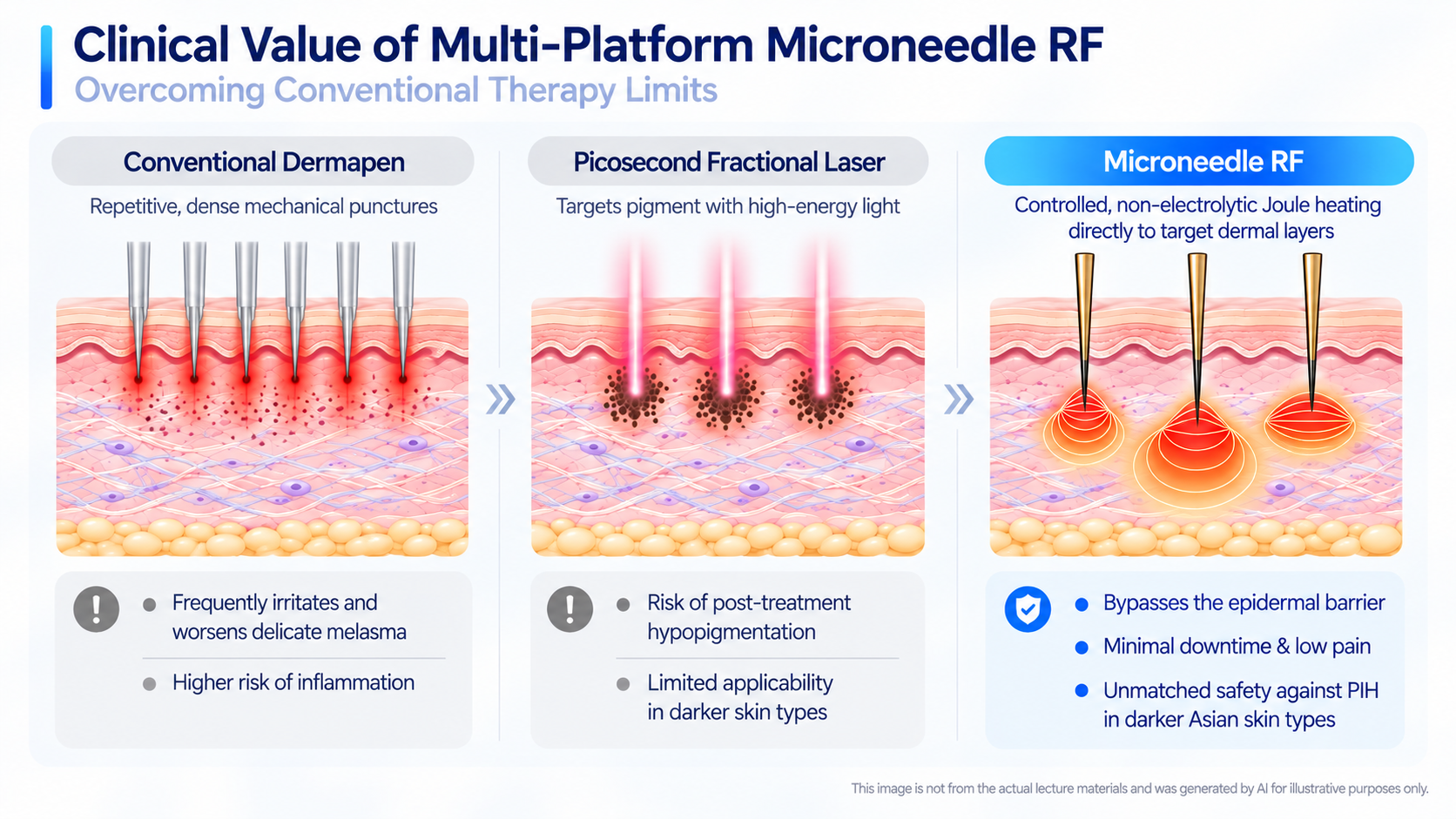
A multi-platform Microneedle RF console provides comprehensive versatility for both new and expanding clinical practices. Traditional mechanical dermapens deliver repetitive, dense physical punctures that frequently irritate and worsen delicate melasma, while pigment-targeting picosecond fractionals carry the risk of post-treatment hypopigmentation.
In contrast, Microneedle RF delivers controlled, non-electrolytic Joule heating directly to target dermal layers while bypassing the epidermal barrier. This mechanism provides minimal downtime, low pain profiles, and unmatched safety against post-inflammatory hyperpigmentation (PIH) in darker Asian skin types.
Precise Indication Mapping (Rolling Scars & Pores) & CP Tip + PLLA (McCoom) Volumization [13:03~]
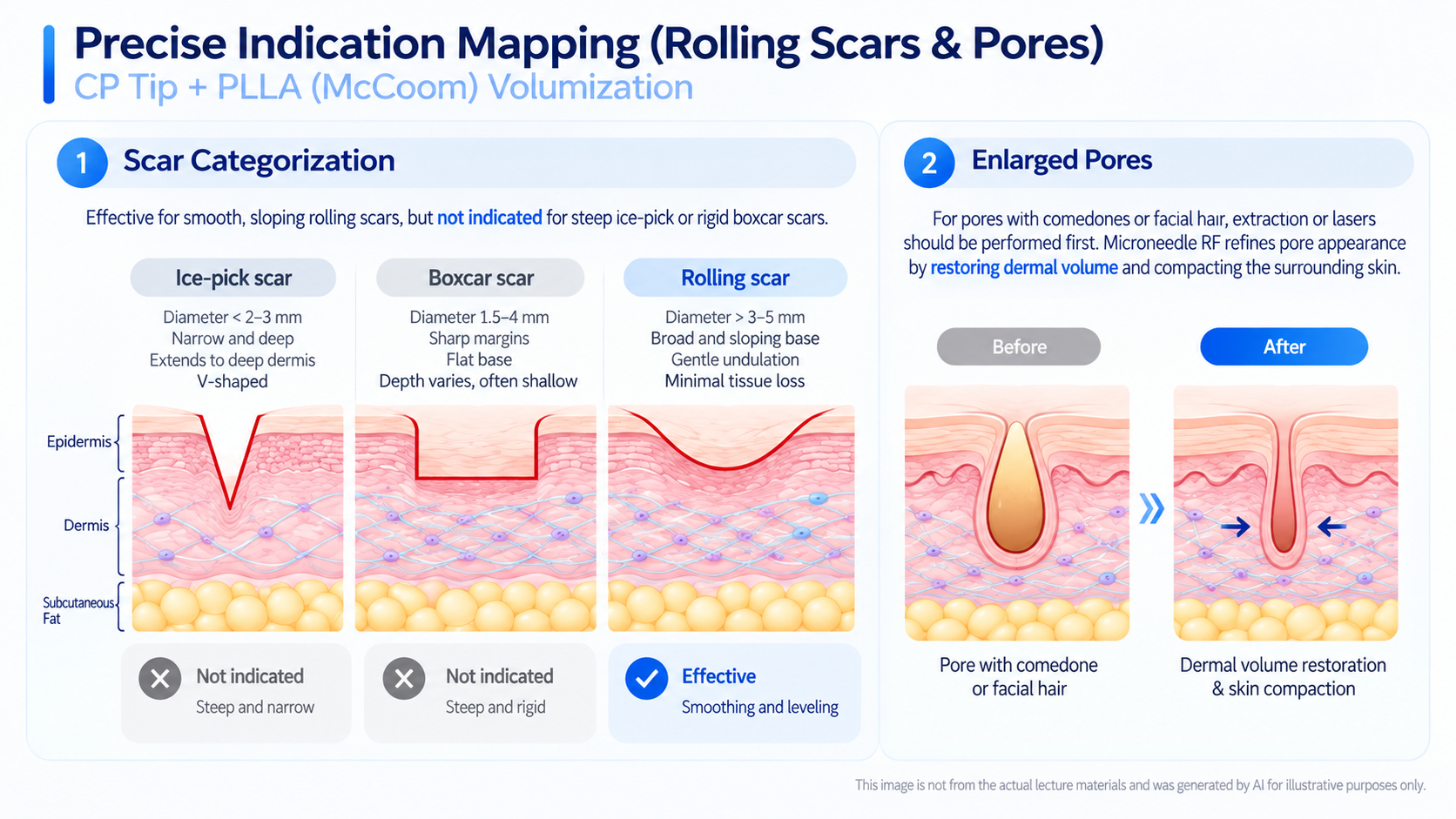
Accurate morphological categorization is essential when performing Microneedle RF:
- Scar Categorization: The platform is not indicated for steep ice-pick or rigid boxcar scars; however, it achieves remarkable smoothing and leveling in smooth, sloping rolling scars by replenishing dermal volume and applying horizontal vector tightening.
- Enlarged Pores: For pores blocked with comedones or facial hair, extraction or lasers must precede. Microneedle RF refines pore appearance by restoring deficient dermal extracellular matrix (ECM) volume, compacting the surrounding skin envelope.
- CP Tip with McCoom: When delivering biostimulators, needles insert without active current to prevent energy conduction through surface fluid. Delivering PLLA microparticles (>20 µm) prompts a physiological foreign-body encapsulation cascade where recruited fibroblasts deposit dense collagen around the biocompatible particles, achieving safe, long-lasting volumization without granuloma formation.
Scarless Intradermal Coagulation: Single-Needle Mode for Syringomas & Sebaceous Hyperplasia [15:00~]
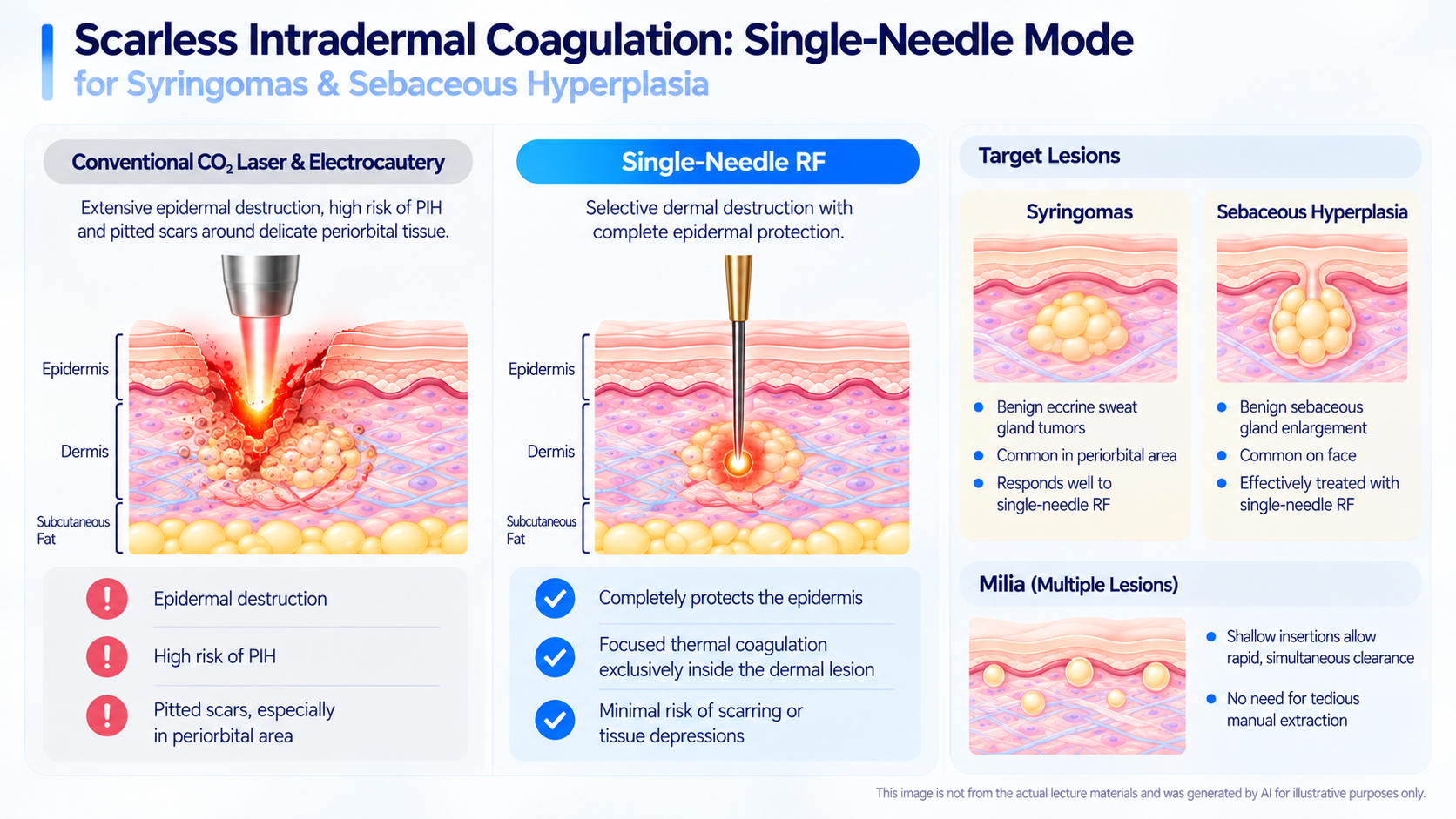
Conventional ablative CO2 lasers and electrocautery inflict extensive epidermal destruction, almost inevitably causing severe PIH and pitted scars around delicate periorbital tissue.
- Selective Dermal Destruction: The Single-Needle tip penetrates directly into benign intradermal masses, completely protecting the epidermis while delivering focused thermal coagulation exclusively inside the dermal lesion.
- Verified Outcomes: Over 3 sessions with a 10-month follow-up, syringomas and sebaceous hyperplasia regressed significantly without scarring or textural depressions. Furthermore, shallow insertions allow rapid, simultaneous clearance of widespread milia without tedious manual extraction.
Indication-Specific Tip Protocols for Melasma & Skin Laxity (S Tip, Diamond Tip, SFA Tip) [20:38~]
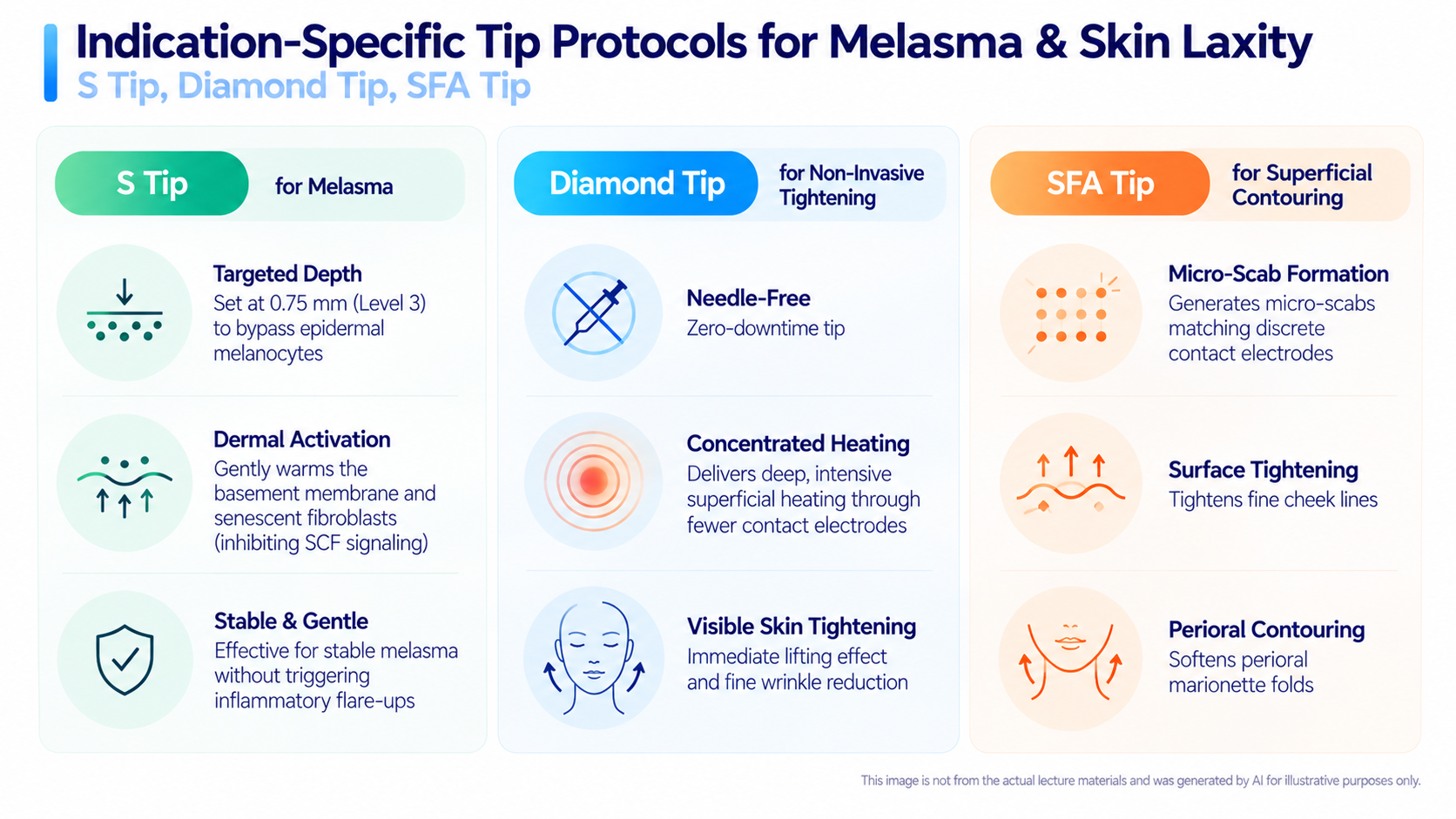
Selecting the appropriate tip and frequency ensures targeted efficacy across diverse indications:
- S Tip for Melasma: For stable melasma resistant to conventional toning, setting the S Tip at 0.75 mm (Level 3) bypasses epidermal melanocytes to gently warm the basement membrane and senescent fibroblasts (inhibiting SCF signaling) without triggering inflammatory flare-ups.
- Diamond Tip for Non-Invasive Tightening: A needle-free, zero-downtime tip that concentrates thermal energy through fewer contact electrodes, delivering deep, intensive superficial heating for immediate facial lifting and fine wrinkle reduction.
- SFA Tip for Superficial Contouring: Generates micro-scabs matching discrete contact electrodes to tighten fine cheek lines and soften perioral marionette folds.
- Frequency Modulation: Clinicians can toggle between 2MHz for high linearity and intense localized coagulation (e.g., focal lesions) and 1MHz for gentle, diffuse volumetric heating across broader treatment zones.